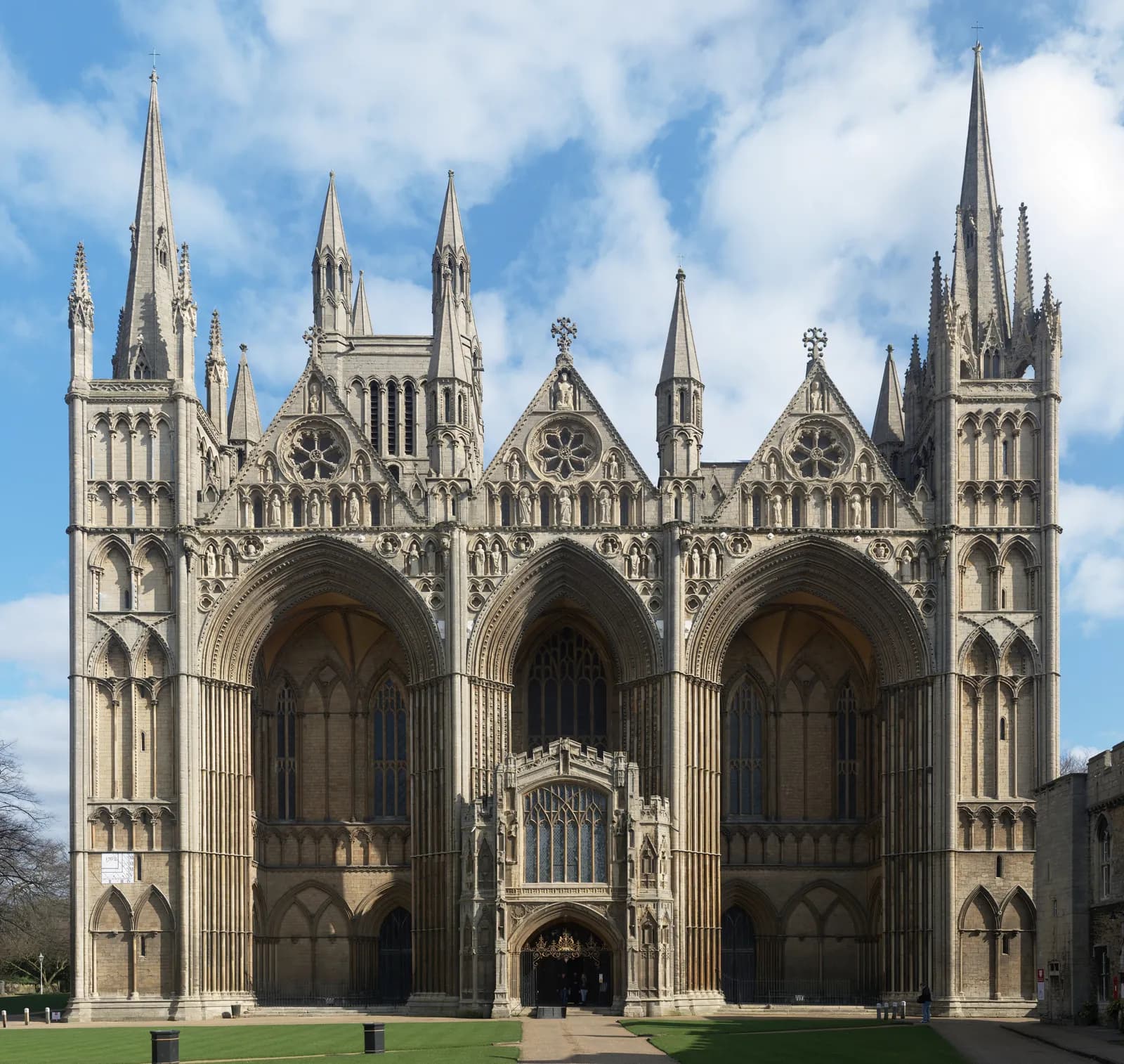
A Masterpiece of Norman Architecture
Peterborough Cathedral stands as one of the finest examples of Norman architecture in England. Construction of the present building began in 1118 under Abbot John de Sais and took 120 years to complete. The cathedral's vast nave, with its painted wooden ceiling installed in the thirteenth century, remains one of the most significant architectural achievements of the medieval period.
The Burial Place of Queens
The cathedral holds a unique place in English royal history. Behind the high altar lies the resting place of two queens: Catherine of Aragon, the first wife of Henry VIII, who died at Kimbolton Castle in 1536; and Mary, Queen of Scots, who was initially interred here following her execution at Fotheringhay Castle in 1587 before her son James I had her remains moved to Westminster Abbey.
Catherine of Aragon's funeral was the last Catholic service held within the cathedral before the Dissolution. Her black marble slab, marked with an inscription, continues to draw visitors from across the world who come to pay their respects to this pivotal figure of the Tudor period.
From Abbey to Cathedral
The site has been a place of worship since the seventh century. The original monastery, founded by King Peada of Mercia around 655 AD, was destroyed by Viking raids in the ninth century. A second abbey was established by the Benedictines in the tenth century, only to be consumed by fire in 1116. The present structure rose from these ashes.
When Henry VIII dissolved the monasteries in 1539, Peterborough Abbey was spared destruction and elevated to cathedral status in 1541. This transformation created the seat of the Diocese of Peterborough, which continues to serve the faithful across Northamptonshire, Rutland, and Peterborough itself.
Restoration and Preservation
The nineteenth century brought extensive restoration under the direction of architects John Loughborough Pearson and John Loughborough Pearson Jr. Their work addressed centuries of deterioration and returned much of the building to its former glory. More recent conservation projects have focused on preserving the delicate stonework and the famous painted ceiling, ensuring this heritage remains intact for future generations.
A Living Monument
Today, Peterborough Cathedral functions as an active place of worship, a concert venue, and a heritage destination. The building hosts regular services, educational programmes, and cultural events that maintain its relevance within the community. Visitor numbers consistently rank the cathedral among the most popular historic attractions in the East of England.
The cathedral's west front, with its three enormous Gothic arches, presents one of the most distinctive silhouettes in English ecclesiastical architecture. This facade, added in the thirteenth century, demonstrates the transition from Norman solidity to Gothic verticality that characterises the building as a whole.
Local Significance
For Peterborough residents, the cathedral represents more than a historical monument. It serves as a landmark, a gathering place, and a reminder of the city's deep historical roots. The surrounding Cathedral Precincts offer green space in the city centre, while the building itself continues to host ceremonies that mark the significant moments of local life: graduations, memorials, celebrations, and civic events.
The cathedral's location at the heart of the city reflects Peterborough's origins as a settlement built around this sacred site. As the city has expanded and modernised, the cathedral remains the fixed point around which Peterborough's identity continues to revolve.